
How Do Porta Potties Work?
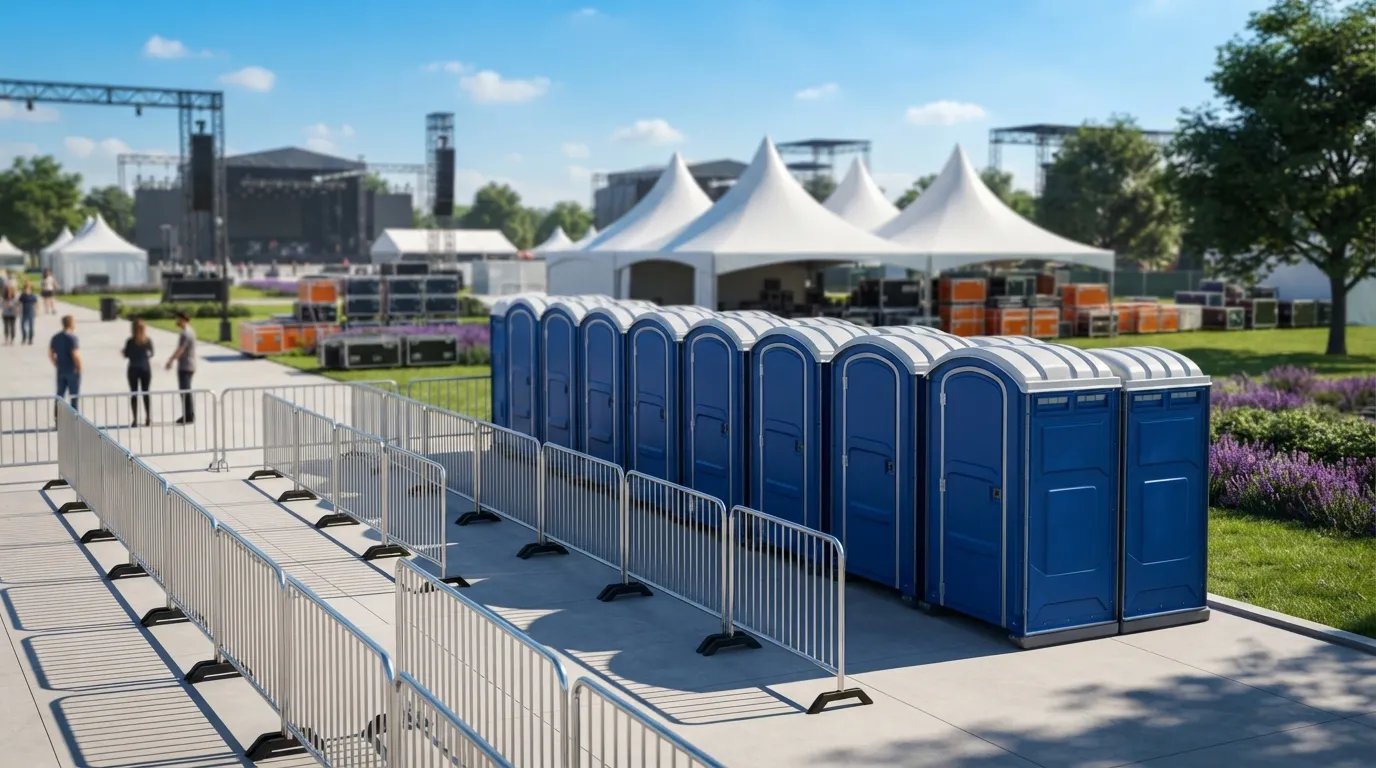
The setup is simpler than people expect. Underneath the seat is a tank, and the unit itself sits about 44 by 48 inches on the ground and stands roughly 92 inches tall, per specs used across standard porta potty rental units. You use it, waste drops into the tank, and a blue liquid down there breaks it down and knocks out smell between services. That's the whole mechanism. No plumbing, no electricity, nothing to hook up. It's why these units show up fast for construction site services and just as fast for a backyard wedding.
Portable toilet chemicals near me searches usually turn up the same answer: it's a deodorizer and digester blend, not a cleaner you add yourself. Our trucks handle that refill during the scheduled pump-out. ANSI/PSAI Z4.3, the industry standard for portable sanitation service, sets a baseline of one service visit per week for up to 10 users across a 40 hour week. Busy Lubbock sites often need more frequent visits, which is a scheduling conversation, not a chemical one. If you're trying to figure out how many units and how often, the how many porta potties do I need guide walks through headcount math, and how often are porta potties cleaned covers service frequency in more detail.
How Do Flushable Porta Potties Work?
A flushable unit uses a small onboard freshwater tank and a hand or foot pump to rinse the bowl after each use, pushing waste into a separate holding tank. That's the core difference from a standard unit: fresh water in, waste and rinse water held separately below. Our deluxe flushable porta potty line runs this setup and it's a common request for events where guests expect something closer to a real bathroom. Weekly deluxe rental in Lubbock falls in a fairly tight band, and it's worth comparing against a standard unit before booking.
| unit | day | week |
|---|---|---|
| standard | $100 - $350 | $130 - $500 |
| deluxe | $85 - $1200 | $150 - $290 |
Flushable units still need pumping once the holding tank fills, same as standard units. They don't connect to sewer lines and they're not a substitute for a restroom trailer rental if you need sinks and mirrors too. For weddings and similar events where appearance matters, check the wedding restroom rental page or the luxury restroom trailer option.
How Does a Portable Sink Work?
A portable sink runs on a self-contained freshwater tank, a foot pump or hand pump to push water through the faucet, and a wastewater tank underneath to catch the runoff. No plumbing required, same as the toilets. Soap gets mounted right on the unit. That matters because 29 CFR 1910.141(d)(2) requires washing facilities to include soap and towels or a hand-drying device, and hand sanitizer alone doesn't meet that. Our handwashing station rental and portable sink rental units are both built to satisfy that requirement on active job sites.
If your crew is applying paints, coatings, herbicides or insecticides, OSHA 1926.51(f)(1) specifically requires washing facilities for that contaminant exposure, separate from general sanitation rules. General potable water supply for any construction workplace falls under OSHA 1926.51(a)(1). For agricultural crews doing hand labor, OSHA 1928.110 sets a different bar: one facility per 20 employees, reachable within a quarter mile walk, which matters for farm operations outside Lubbock proper. See farm and agricultural restrooms and handwashing requirements for the full breakdown.
Are Camping Porta Potties Different?
Not in mechanism, just in scale and portability. Camping-style portable toilets often use a smaller sealed tank and a simpler seal, but the same principle applies: waste and chemical sit in a tank until it's dumped. For a group camping trip near Ransom Canyon, 13.3 miles east of Lubbock, or out toward Buffalo Springs, 13.1 miles east, a standard unit rented by the weekend usually covers it better than a personal camping toilet. Check the camping porta potty page for sizing.
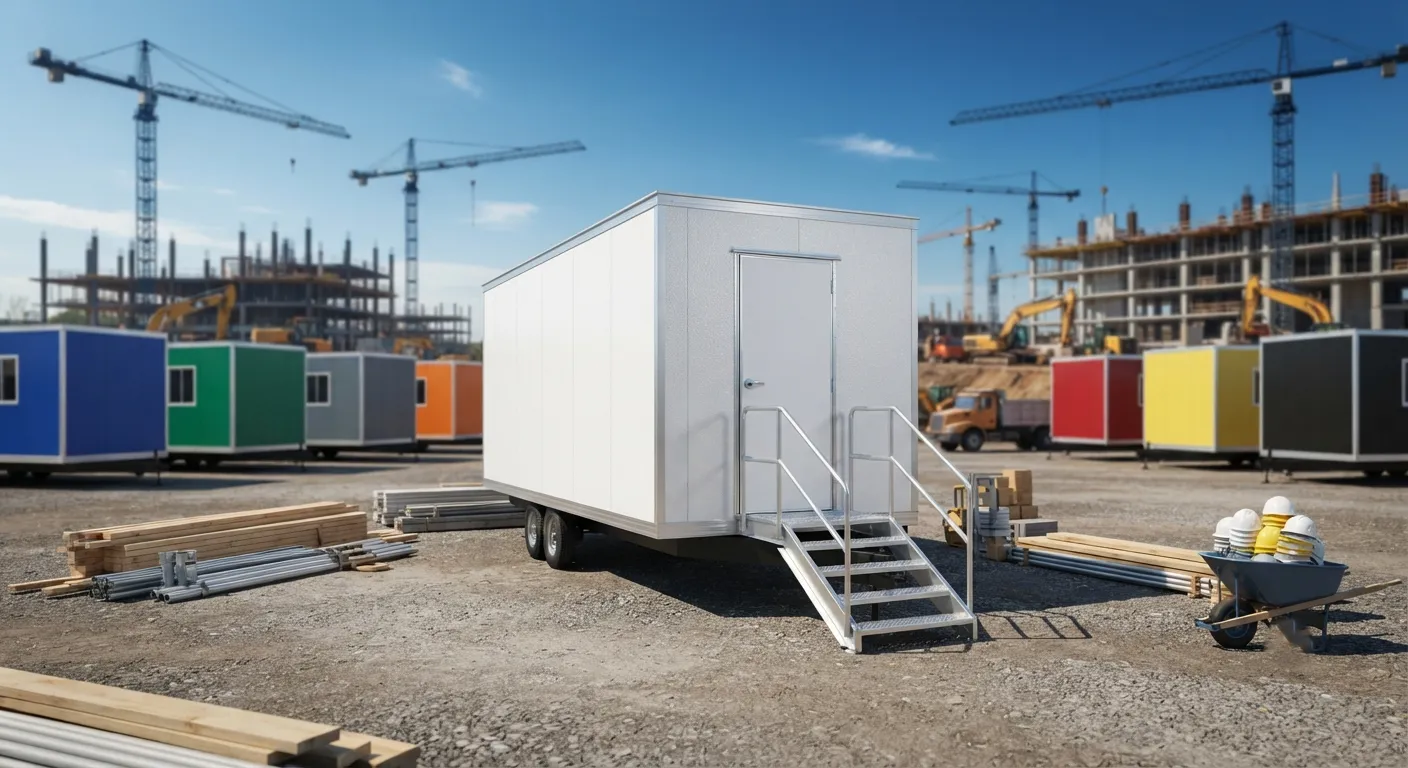
Construction worker running to a porta-potty on an active site needs a unit that's close, code-compliant, and serviced on schedule. OSHA 1926.51(c) sets toilet counts for construction sites: one facility for 20 workers or fewer, then additional seats and urinals as headcount climbs past 20 and again past 200. A crew working a site near Wolfforth, 8.4 miles southwest of Lubbock, still falls under that same standard regardless of city line. For ADA-accessible units, ADA Standards 213.2 requires at least one accessible unit in any cluster, even a small one, and our ada accessible porta potty units meet that spec. Pricing questions belong on the porta potty rental cost or porta potty rental per day pages.
How often does a porta potty get pumped?
Standard service follows ANSI/PSAI Z4.3's baseline of once weekly for up to 10 users over a 40 hour week. High-traffic events or larger crews need more frequent pump-outs. We schedule around actual usage, not just a calendar default, so a busy Lubbock festival site might get serviced two or three times a week.
Do porta potties smell?
They shouldn't, if serviced on schedule. The chemical mix inside the tank is built to control odor between pump-outs, and airflow vents help too. Heat, overuse, or a missed service visit are the usual causes when smell becomes a problem. See do porta potties smell for more.
What chemicals go in a porta potty?
A blue deodorizing and digesting liquid, added during setup and refilled at each service visit. It breaks down solids and masks odor between uses. This isn't something renters add themselves; it's part of the service.
Can I flush toilet paper in a porta potty?
Standard single-ply toilet paper is fine and breaks down with the tank chemical. Wipes, paper towels, and anything not designed to dissolve should go in the trash instead, since they can clog the tank or complicate pump-out.
How is a porta potty different from a septic tank?
A porta potty is a small sealed, portable holding tank with no plumbing. A residential septic tank is a buried fixed system, typically pumped every 3 to 5 years depending on tank size and household use. See septic pumping service for that side of things.
Next step
Get a delivery date
Tell us the address, the dates and the headcount. We size the order and confirm the route.