
How Many Porta Potties Do I Need for a Construction Site?
OSHA 1926.51(c) is the actual rule, and it works in brackets, not a flat ratio. Crews of 20 or fewer need 1 toilet facility. From 20 up to 200 workers, add 1 toilet seat and 1 urinal per 40 people. At 200 or more, that ratio loosens to 1 seat and 1 urinal per 50 workers. A 15-person framing crew in Lubbock needs just one standard porta potty rental. A 60-person site crosses into the 40-person bracket and needs two units minimum, plus a look at portable restroom rental options if trades overlap shifts. Bigger commercial jobs should route straight to construction site services planning rather than guessing unit count from headcount alone. OSHA 1926.51(a)(1) also requires potable water on site, which is worth bundling with your toilet order. Multi-week jobs usually make more sense as a monthly porta potty rental than repeated short-term orders, and the porta potty rental cost page breaks down where that math tips in your favor.
How Many Porta Potties Do I Need for an Event?
Events don't run on OSHA brackets, they run on guest count and hours. A wedding of 100 guests over a 5 hour reception typically needs 2 to 3 standard units, or one deluxe flushable porta potty if the budget allows for something nicer near the tent. Add one ADA-compliant unit per ADA Standards section 213.2, which requires at least 5 percent of clustered single-user toilets to be accessible, and never fewer than one. Concerts and festivals push the ratio harder because of concentrated arrival and departure windows; check festival restroom rental or concert restroom rental guidance before locking a number. For a backyard wedding restroom rental, one ADA accessible porta potty alongside two standards covers most 75 to 125 guest counts comfortably.
| event size | duration | units suggested |
|---|---|---|
| 50 guests | 4 hours | 1 standard |
| 100 guests | 4 to 5 hours | 2 to 3 standard, 1 ADA |
| 250 guests | 6 hours | 5 to 6 standard, 1 to 2 ADA |
| 500 guests | 8 hours | 10 to 12 standard, 2 ADA |
Does Serving Alcohol Change the Count?
Yes. Alcohol increases bathroom trips and shortens patience for waiting in line, so add roughly 20 percent more units than the dry-event guideline. A 200-guest Lubbock backyard party with a beer truck should plan for 5 units instead of the 4 a dry event of that size would need. Multi-day events compound this further: a 3-day outdoor gathering needs servicing scheduled between days, not just more units up front. ANSI/PSAI Z4.3 sets a baseline service interval of once per week for up to 10 users over a 40 hour week, which is far too infrequent for a beer-garden crowd cycling through units all weekend. Talk to Lubbock Porta Pros about a mid-event pump-out if your event runs Friday through Sunday. Golf outings and fairs have their own patterns worth checking separately at golf tournament restrooms and county fair restrooms.
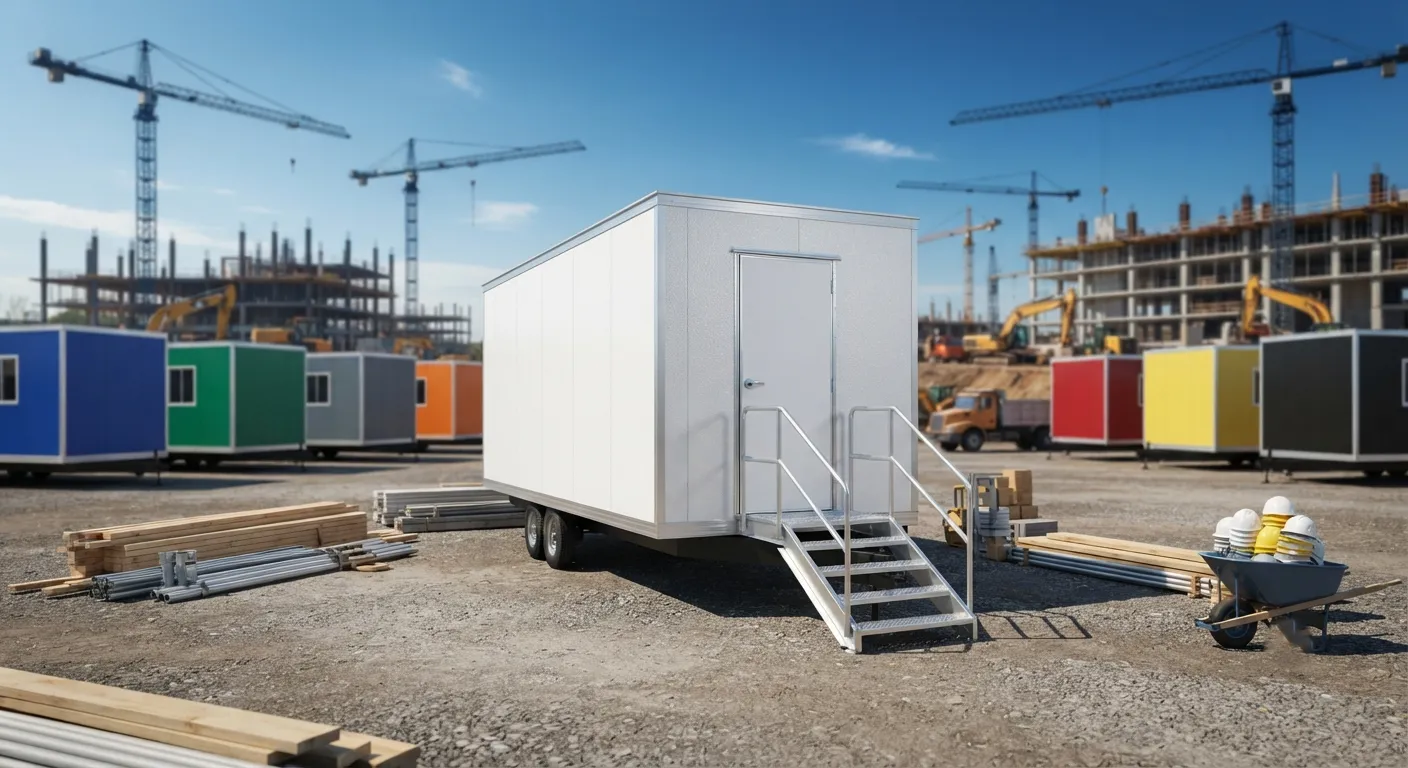
Worked Example: 40-Person Construction Crew, 6-Week Job
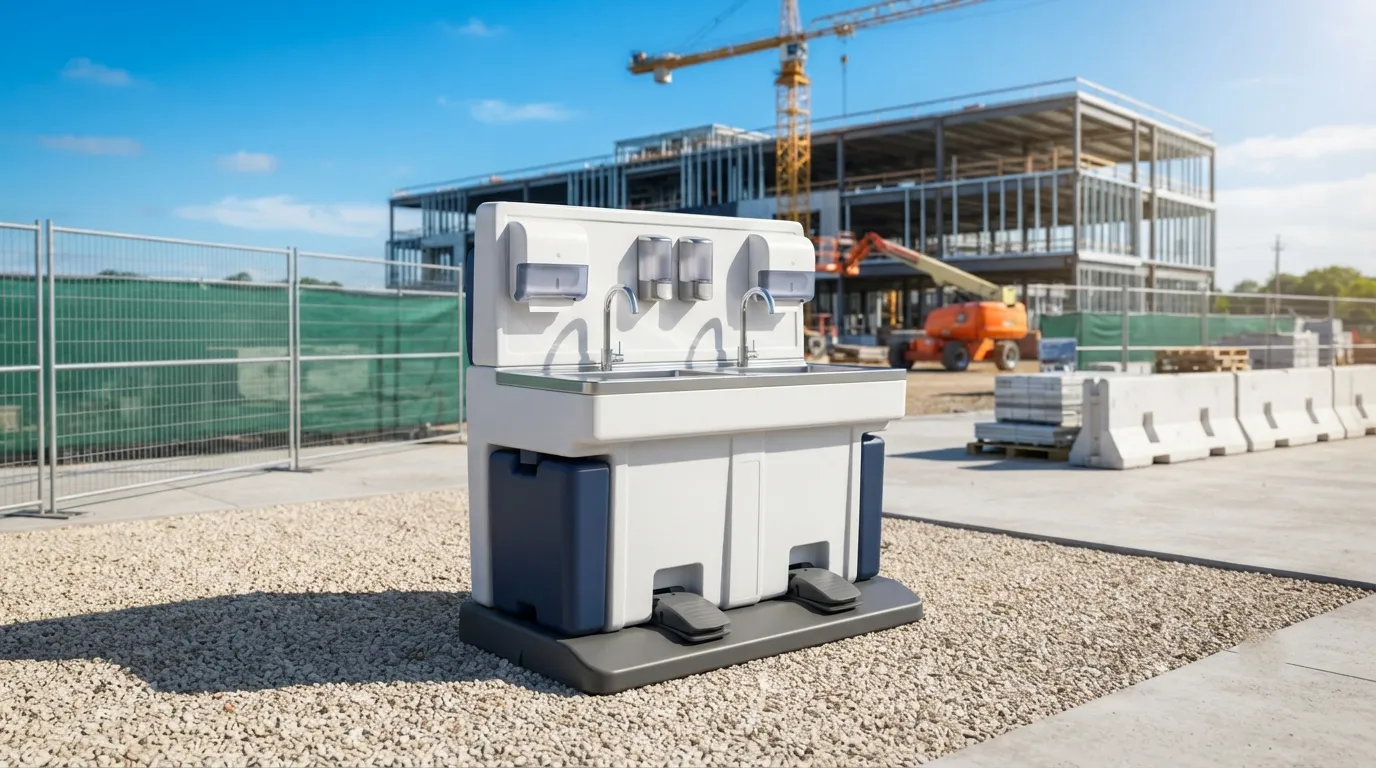
A 40-person crew sits right at the edge of the first OSHA 1926.51(c) bracket, so plan for at least 1 seat and 1 urinal per 40 workers, meaning two combination units cover it with a little slack. Over 6 weeks, that's a job for monthly porta potty rental pricing rather than daily rates, which run from a low of $100 to a high of $350 per unit per day. Monthly rates for standard units run from $125 to $325 depending on service frequency and site access. Add a handwashing station rental since OSHA 1926.51(a)(1) requires potable water regardless of unit count, and 29 CFR 1910.141(d)(2) requires soap and towels or a hand dryer at any washing facility, not just sanitizer. If the crew is applying coatings or herbicides on this job, OSHA 1926.51(f)(1) kicks in separately and requires washing facilities for that contaminant exposure specifically.
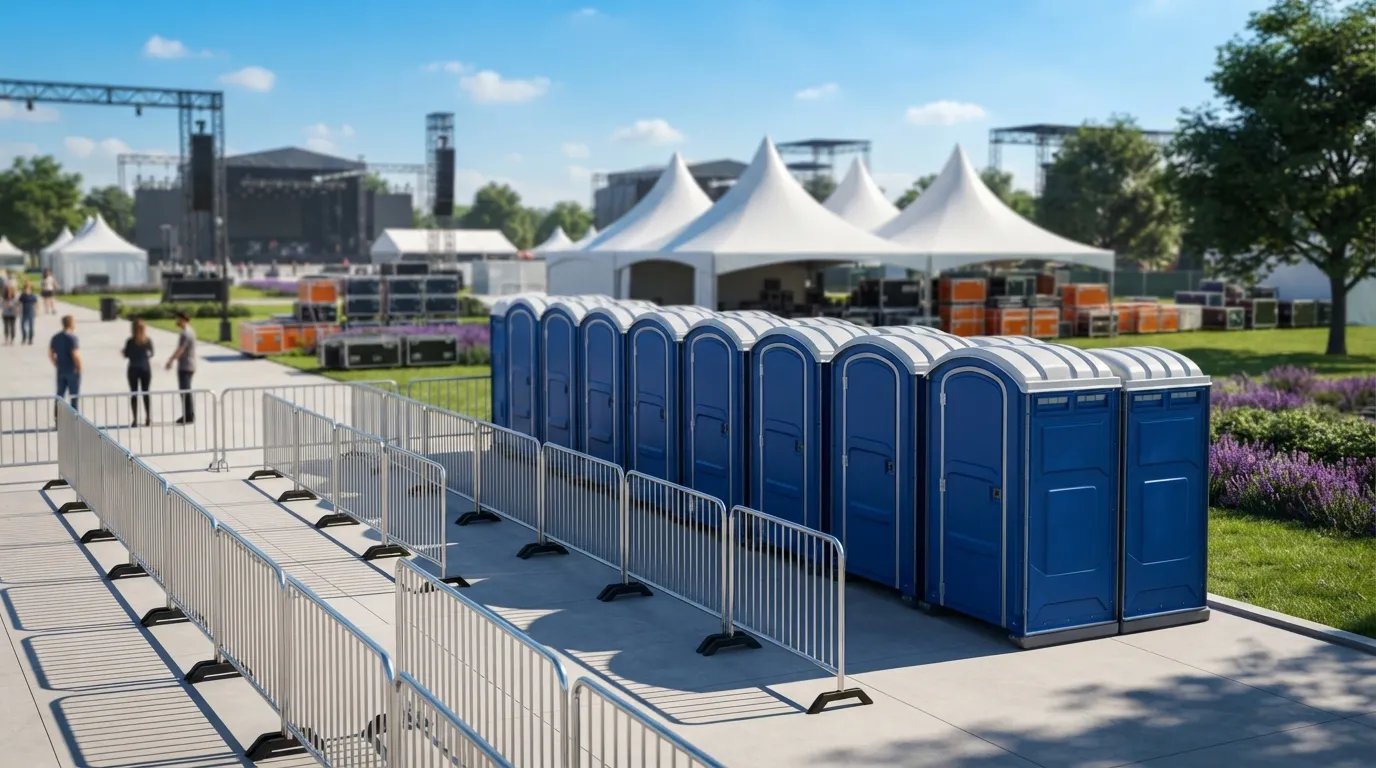
Worked Example: 150-Guest Outdoor Wedding
150 guests over a 6 hour reception lands past the 100-guest bracket, so plan for 3 to 4 standard units plus one ADA unit under ADA Standards 213.2. If the venue is more than a short walk from parking, ADA Standards 403.5.1 requires a 36 inch clear accessible route, and 405.2 caps ramp slope at 1:12 if there's any grade change getting to the units. A Lubbock venue outside city center, say near Wolfforth 8.4 miles southwest or Shallowater 12.1 miles northwest, should factor delivery distance into scheduling since drive time affects the delivery window more than it affects price. Weekend rates for a standard unit run from $125 to $400, and a deluxe flushable porta potty weekend rental runs $150 to $290. For a nicer look near the ceremony, a restroom trailer rental weekend rate runs $900 to $3,000 depending on stall count; the 2 stall restroom trailer is the common choice for this guest range.
What Else Affects the Right Number for My Job?
Duration, site layout and cleaning frequency all shift the math more than headcount alone. A single-day event needs fewer service visits than a month-long jobsite, but it may need more units up front to avoid lines during peak arrival. Porta potty placement guide covers site layout, and ground surface matters too: ADA Standards 302.1 requires stable, firm, slip-resistant footing for any accessible unit, which rules out soft turf or loose gravel as a pad. If your Lubbock site is tight on space, check porta potty permit requirements before finalizing placement, since sidewalk or right-of-way placement needs confirming with the city and no ordinance number is assumed here. Winter jobs and events have their own considerations at porta potty in winter, including servicing frequency in freezing weather.
How Does Dumpster Size Relate to Site Services Planning?
Most construction and event sites ordering toilets also need debris removal, and dumpster sizing follows the same "don't undersize it" logic. A 10 yard dumpster runs about 12 feet long and holds roughly 10 cubic yards, or about 270 cubic feet, suited to a small remodel. A 20 yard dumpster is about 20 feet long, holds close to 540 cubic feet, and carries a typical weight range worth checking at dumpster weight limits since heavier debris like shingles or concrete fills the weight limit long before it fills the box. A 30 yard dumpster holds around 810 cubic feet and is rated for a higher tonnage range than the 20 yard, useful for full home cleanouts. A 40 yard dumpster holds roughly 1,080 cubic feet and carries the highest tonnage rating in the lineup, common on larger commercial teardown jobs. Weekly dumpster rates run from $426 to $778, and the dumpster rental cost page has the full daily and monthly breakdown by size, with size-specific detail at 20 yard dumpster rental, 30 yard dumpster rental, and 40 yard dumpster rental.
How many porta potties do I need for 100 guests?
Plan for 2 to 3 standard units plus 1 ADA unit for a 4 to 5 hour event. If alcohol is served, add roughly 20 percent more capacity. Check the how many porta potties do I need table above for other guest counts and durations.
How many tons does a 30 yard dumpster hold?
Weight capacity depends on debris type more than volume; concrete and shingles hit the tonnage limit long before the box fills up. See dumpster weight limits for the specific range Lubbock haulers use, and check 30 yard dumpster rental for the full spec sheet.
How many tons does a 40 yard dumpster hold?
A 40 yard box carries the highest tonnage rating in the standard lineup, but the exact limit still depends on what's going in it; heavy debris like concrete or shingles fills the weight allowance well before it fills the box. See 40 yard dumpster rental and dumpster weight limits for the range.
How many tons does a 20 yard dumpster hold?
A 20 yard dumpster sits in the middle of the tonnage range, below the 30 and 40 yard sizes and above the 10 yard. Debris type still matters more than the box size; see 20 yard dumpster rental and dumpster weight limits for specifics.
How many feet is a 20 yard dumpster?
A 20 yard dumpster runs about 20 feet long, the same footprint referenced above for site planning. Check 20 yard dumpster rental for full dimensions before you confirm placement.
How many cubic feet are in a 20 yard dumpster?
A 20 yard dumpster holds close to 540 cubic feet, as noted above. See 20 yard dumpster rental for the complete size breakdown.
How many cubic feet are in a 40 yard dumpster?
A 40 yard dumpster holds roughly 1,080 cubic feet, the largest standard size in the lineup. See 40 yard dumpster rental for dimensions and use cases.
How many cubic feet are in a 10 yard dumpster?
A 10 yard dumpster holds about 270 cubic feet, in a box roughly 12 feet long. It suits small cleanouts and single-room remodels better than full-house jobs; see 10 yard dumpster rental for dimensions.
Does OSHA require a toilet on every jobsite?
Yes, under 1926.51(c). Crews of 20 or fewer need at least one toilet facility, and the ratio increases in brackets as crew size grows. Full detail is on OSHA portable toilet requirements.
Do I need an ADA unit for a small backyard event?
If units are clustered, ADA Standards 213.2 requires at least 5 percent to be accessible, and never fewer than one. Even a 2-unit backyard setup should include one ADA unit under that rule.
How far in advance should I book for a Lubbock wedding?
Booking early protects your date and unit selection, especially for restroom trailer rental options in peak season. Contact Lubbock Porta Pros as soon as your headcount and venue are set.
Next step
Get a delivery date
Tell us the address, the dates and the headcount. We size the order and confirm the route.